Local Histories
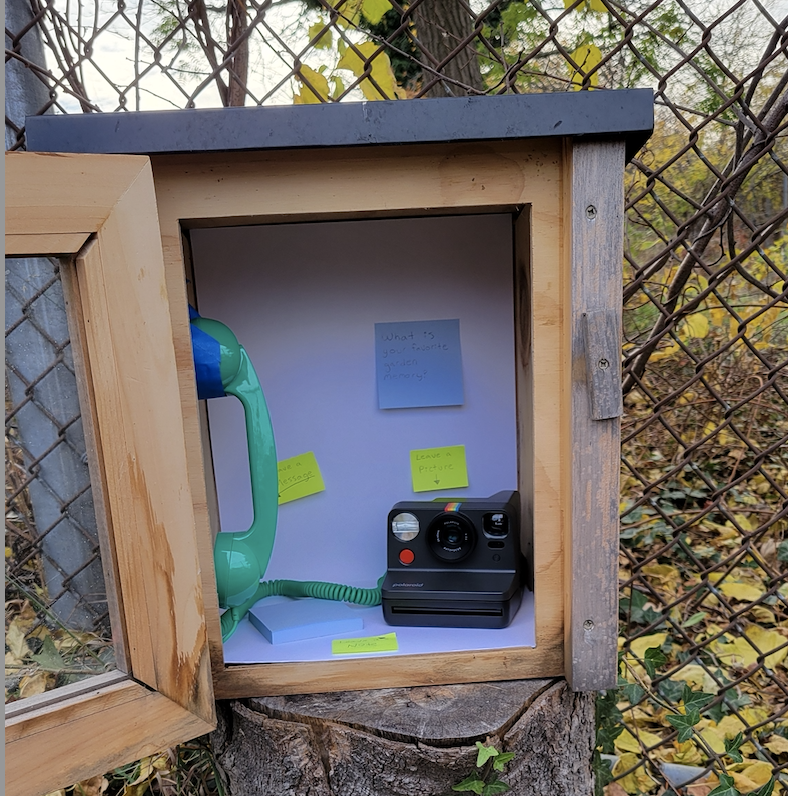
The project consists of a recording library in the garden’s social space, as well as different ambient listening stations positioned at relevant locations around the garden. The Recording Library is built with Raspberry Pi. A simple python program manages playing instructions when the receiver is picked up. It then records and stores new messages. Audio is transmitted by topic to the different listening stations via bluetooth. The technology itself is attached to a board which functions as a false back to the library box it is positioned in.
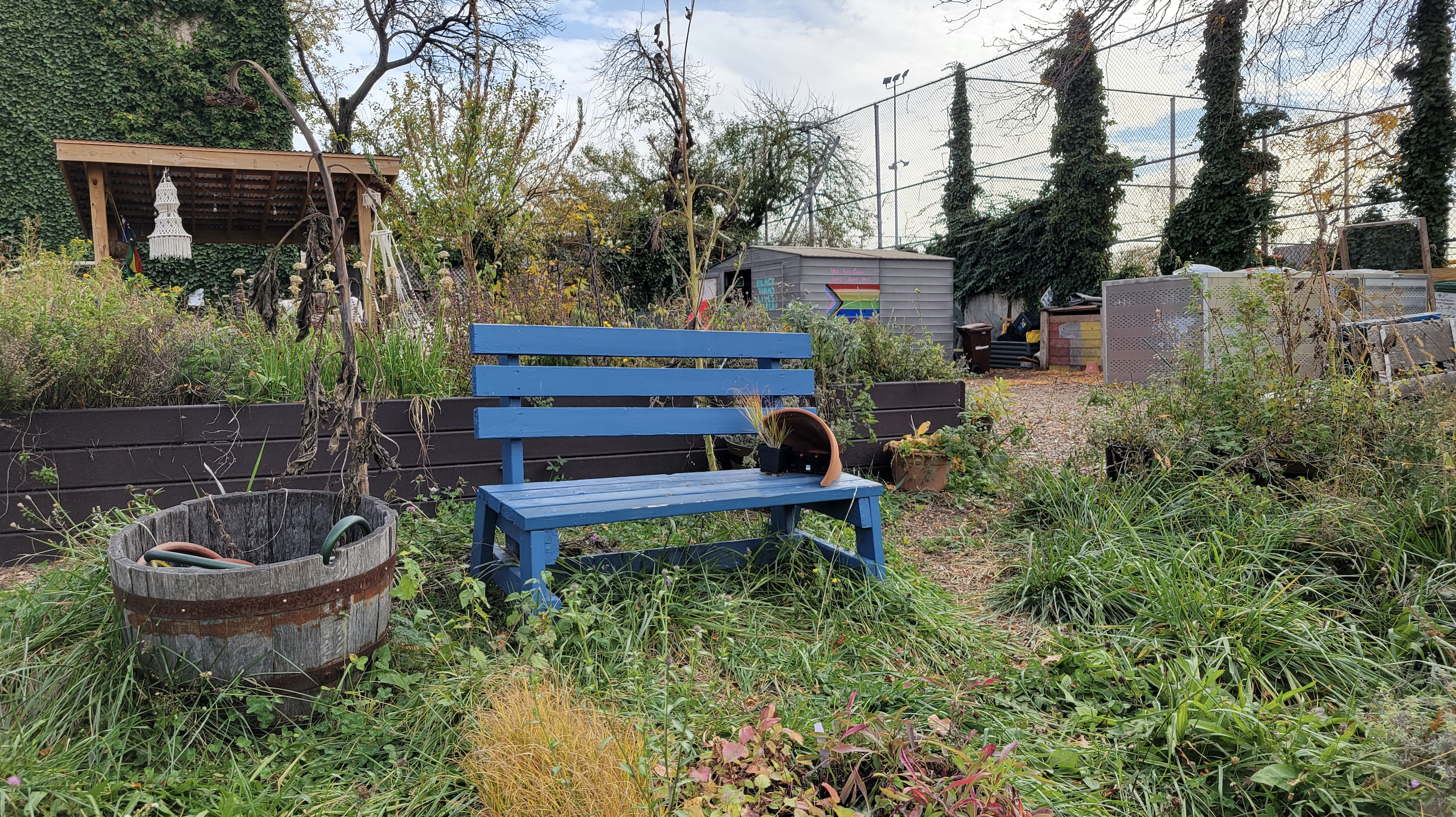
The garden is a space for neighbors to appreciate nature. It was important that this project didn’t feel like an intrusion on organic space.
The recording station’s interface is intentionally opt in, with a receiver that must be picked up in order to initiate recording. Listening stations are made of plants and terracotta pots, intended as a passive background that you can reflect on while taking in the views of the garden.
The perspectives, troubles, and triumphs of garden members remind us we are all in this together.
Vulnerability and Resilience of Community
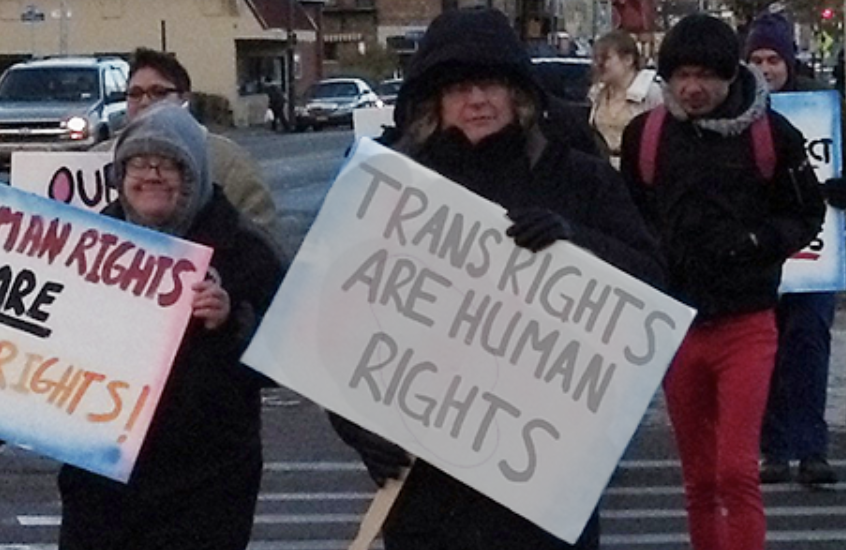
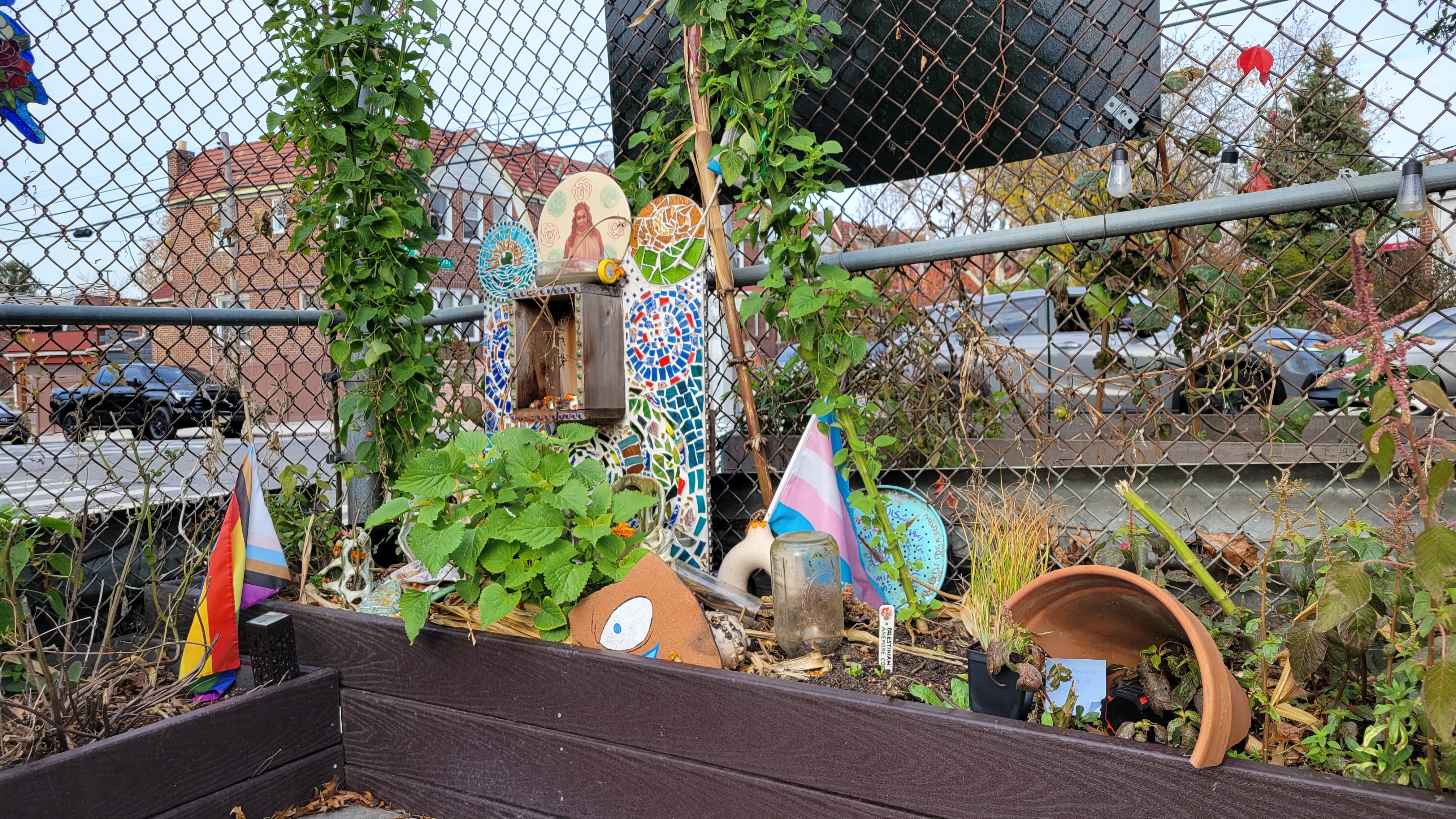
After Cecilia Gentili— an activist for the rights of transgender people and sex workers—passed away in 2024, the garden installed a memorial. Since that time, the garden has faced a lot of negative press. A small but vocal group of conservative neighbors have targeted the garden.Inclusive community agreements for garden members caused further tension. Sharing the gardens history and values live on the open internet does not feel celebrated in the way that Trans Rochester Speaks did in 2016. These memories are intended to be experienced within the garden, and the project’s infrastructure enables that.
Outcomes
Over the course of this class and project I learned:
People are the top layer of infrastructure in community spaces, and are often the access point to any technology the community relies on.
Infrastructure should fit its setting. Scale is not always the answer - sometimes it introduces unnecessary complexity that makes it harder to maintain.
The values of the community are reflected in the infrastructure that they create.