Compost Cubes
When Cecilia Gentilli Community Garden’s wooden compost bins became hard to maintain and required weekly repairs, it was time to find a replacement.I connected with Big Reuse and worked with them to coordinate the installation of new cubes in fall of 2025.
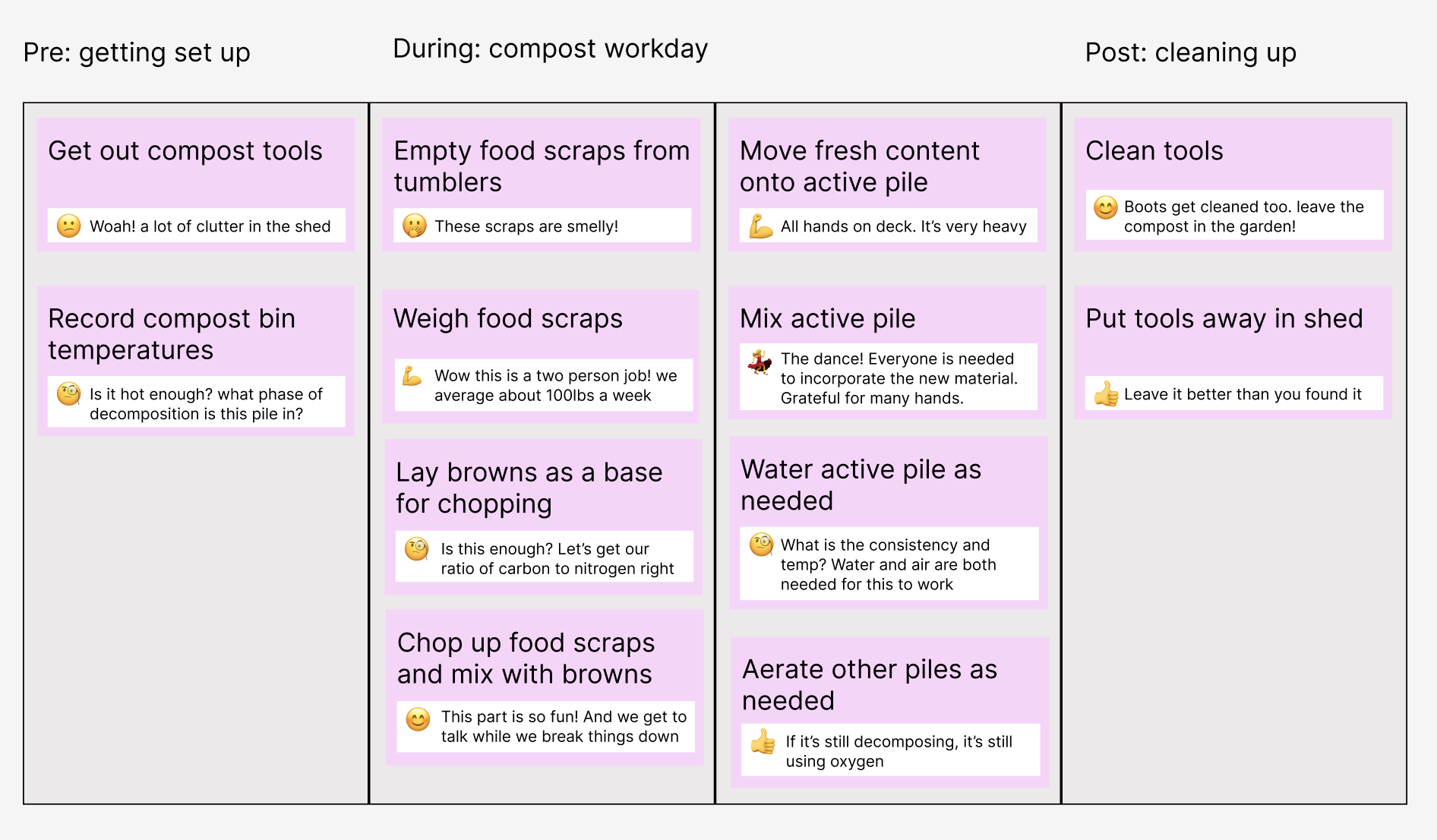
Many hands are needed to prepare materials. To get this all accomplished without getting in each others way is a coordinated act.
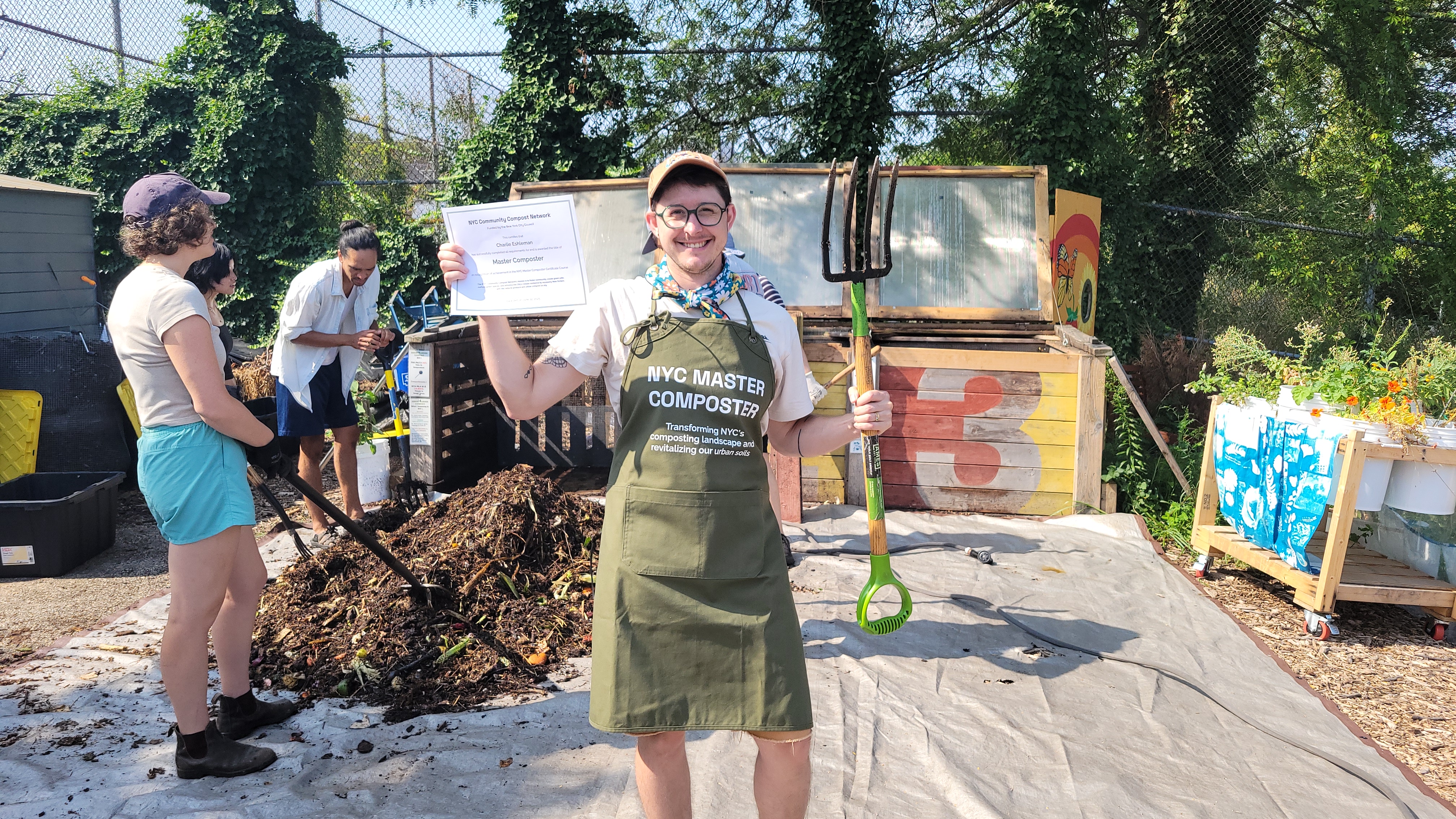
Each week we prepare food scraps and incorporate them into the active pile. Compost volunteers are not the only ones excited about compost! Rodents also try to get into the bins to access it as a food source. Studying the Rodent Reduction Rubric as a part of Master Composter gave me insight into reducing tight spaces and increasing foot traffic to deter rats. Through the Master Composter program, I was able to get a deeper understanding of the compost process, and see compost systems at gardens and urban farms all over New York City.
This was an opportunity to assess the compost system setup and make sure we were getting the most out of our workdays.
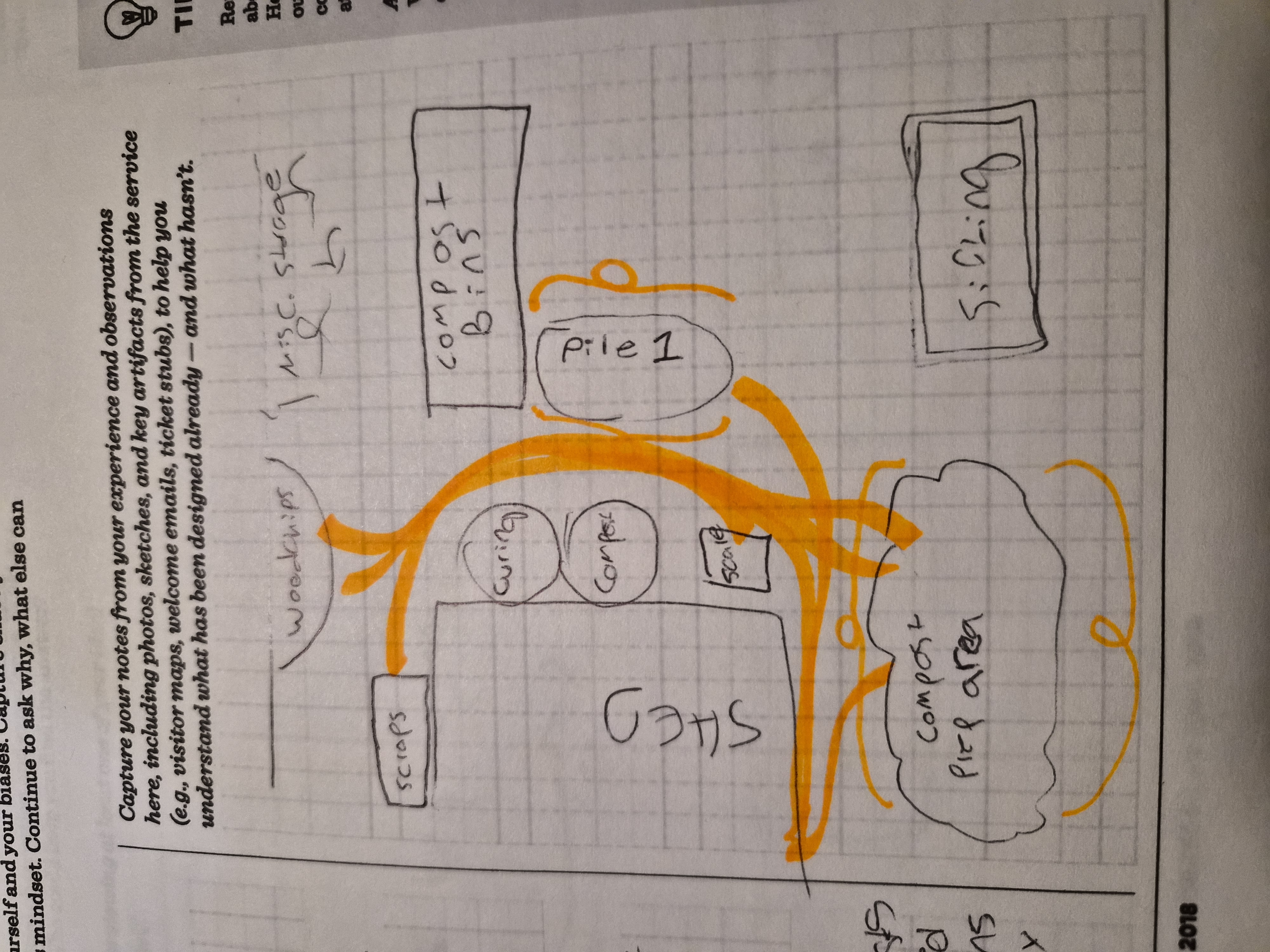
Mapping compost volunteers over the course of the workday highlighted a bottleneck in our system’s layout.
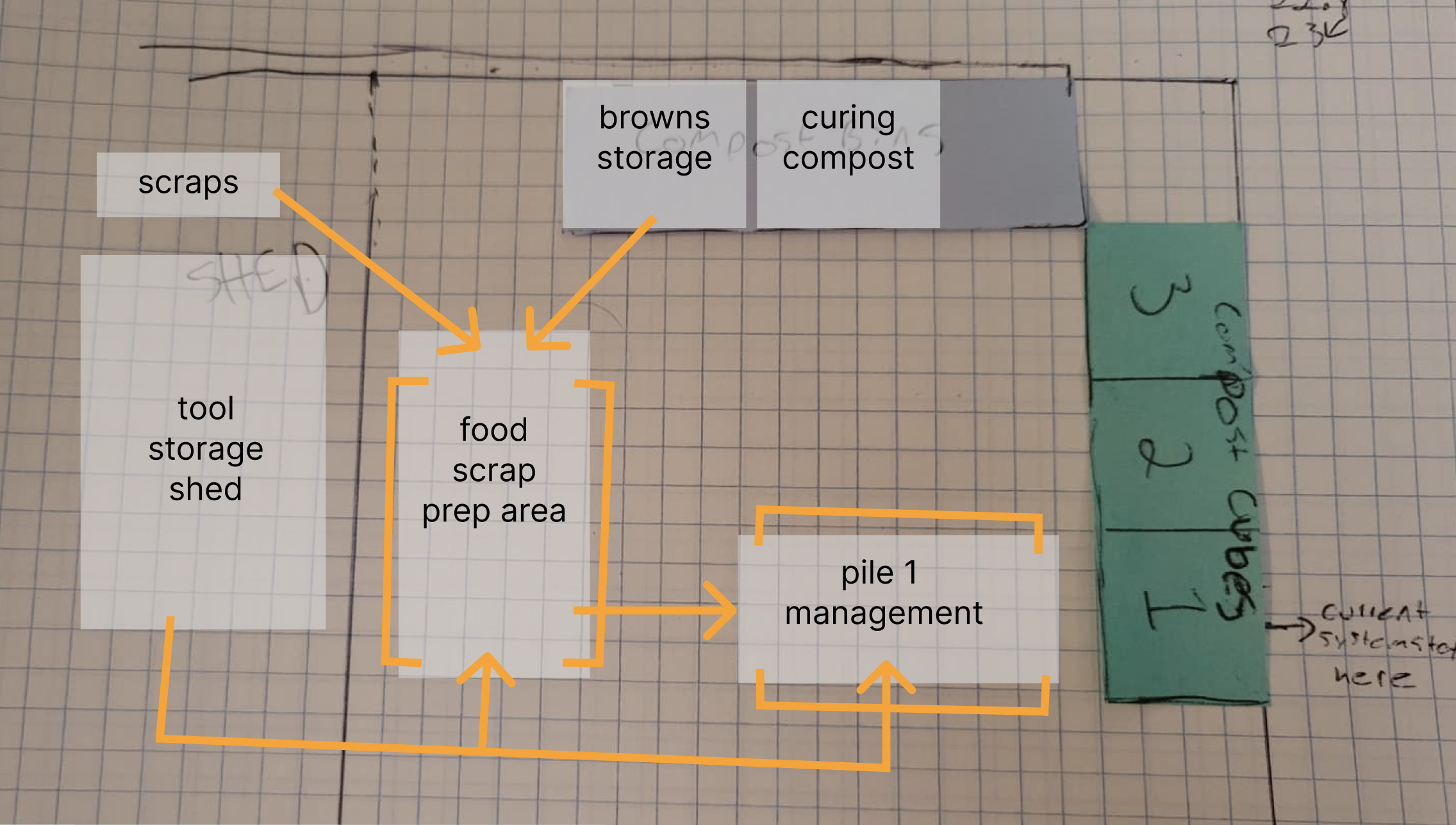
Around the time of the new install, I was also taking a human centered service design course through IdeoU. After creating a user journey and mapping the flow of tasks, I suggested to the crew that we move the position of the bins to allow more tasks to happen at once, with less overlapping paths and shorter distances to move heavy compost.
Outcomes
We are able to process food scraps more quickly and seamlessly. This leaves more time for secondary tasks like sifting and browns prep. We are now able to handle a greater capacity of compost.Rodent mitigation has vastly improved from our previous system, with new bin one placement away from tight spaces and near increased foot traffic by the garden entrance.